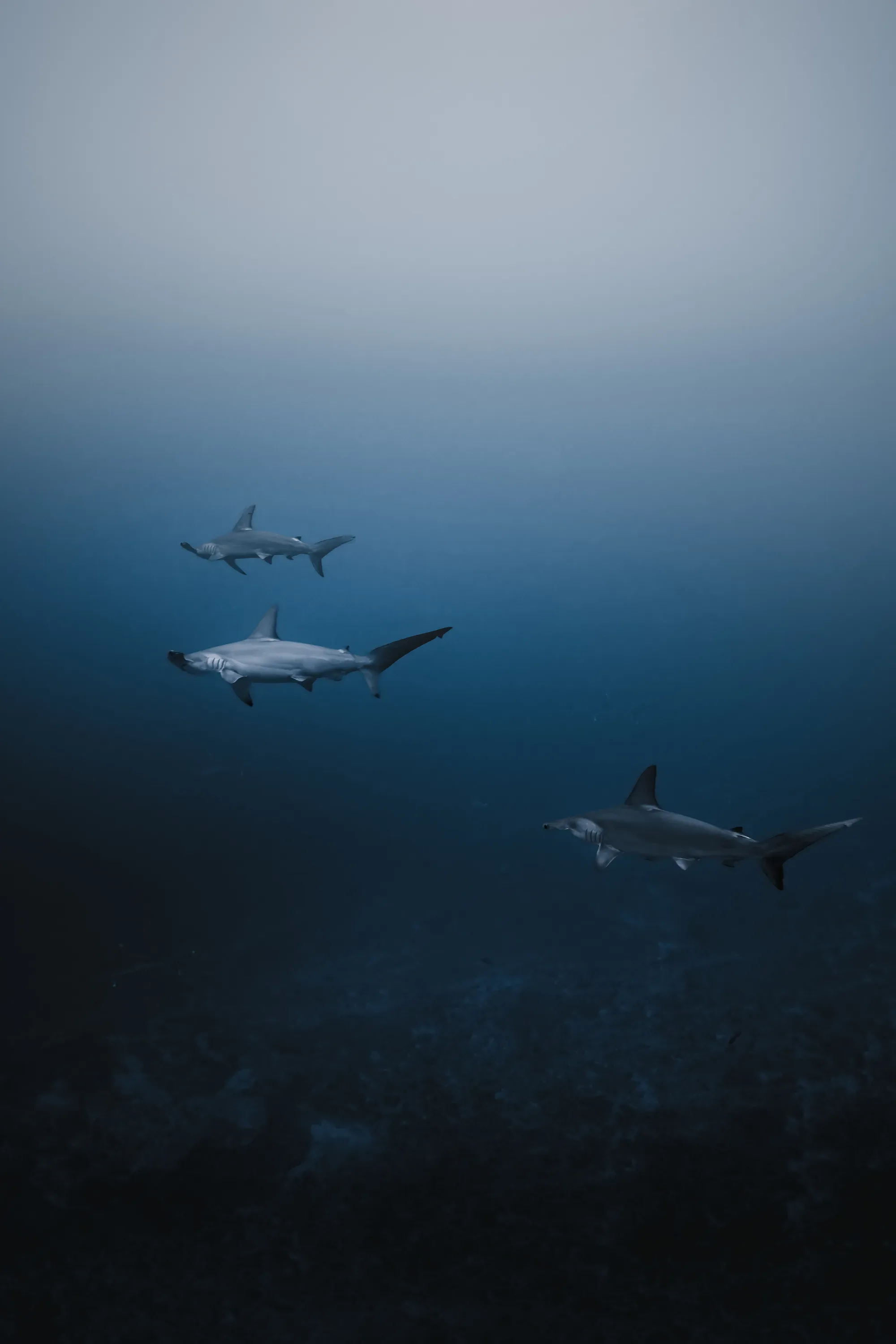
Meet Sphyrna lewini
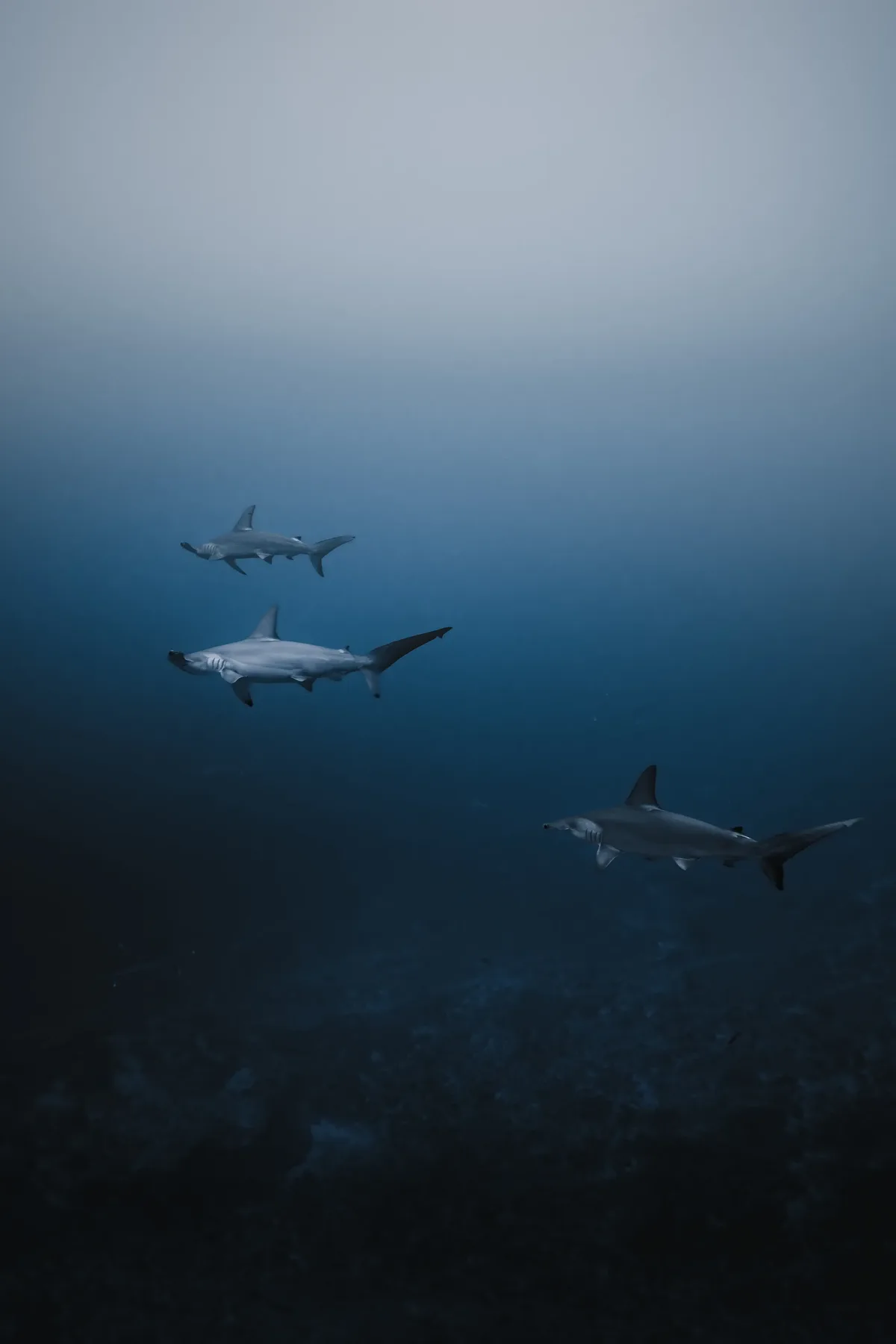
Species Data
- Scientific name
- Sphyrna lewini
- Family
- Sphyrnidae (hammerhead sharks)
- Adult length
- 2.5-4.3m (females larger than males)
- Adult weight
- 80-150 kg average
- Lifespan
- 30+ years
- Diet
- Fish, squid, octopus, crustaceans, rays
- IUCN status
- Critically Endangered (severe global population decline)
- Distinguishing marks
- Wide, flattened head (cephalofoil) with scalloped front edge; grey-brown dorsal colouring; white ventral side; tall first dorsal fin
Schooling behaviour - from field observation
Scalloped hammerheads at Fuvahmulah form loose schools along the deep southern reef edges, particularly where strong currents bring nutrients past the reef wall. Schools range from a handful to several dozen individuals, typically cruising at 20-30m depth. They are cautious around divers but will pass at close range if you remain still against the reef. Dawn and the turning of tides are the most productive times. Individuals often break from the school to visit cleaning stations before rejoining the formation.
Hammerheads and the Deep South
Fuvahmulah's southern reef system drops vertically from 15 metres to over 2,000 metres. This abrupt depth change creates a convergence zone where deep-ocean currents slam into the reef wall, pushing nutrients upward and concentrating marine life along the edge.
Scalloped hammerheads exploit this exact phenomenon. They cruise the reef wall where the current is strongest, hunting fish that school along the thermocline. Fuvahmulah's isolation - far from any other atoll - means the hammerhead population here is self-sustaining and not shared with neighbouring reef systems.
The encounter is drift diving at its purest. You descend along the wall, find the current, and let it carry you past the sharks. The skill is positioning: get too shallow and you miss them; get too deep and you burn through your air.
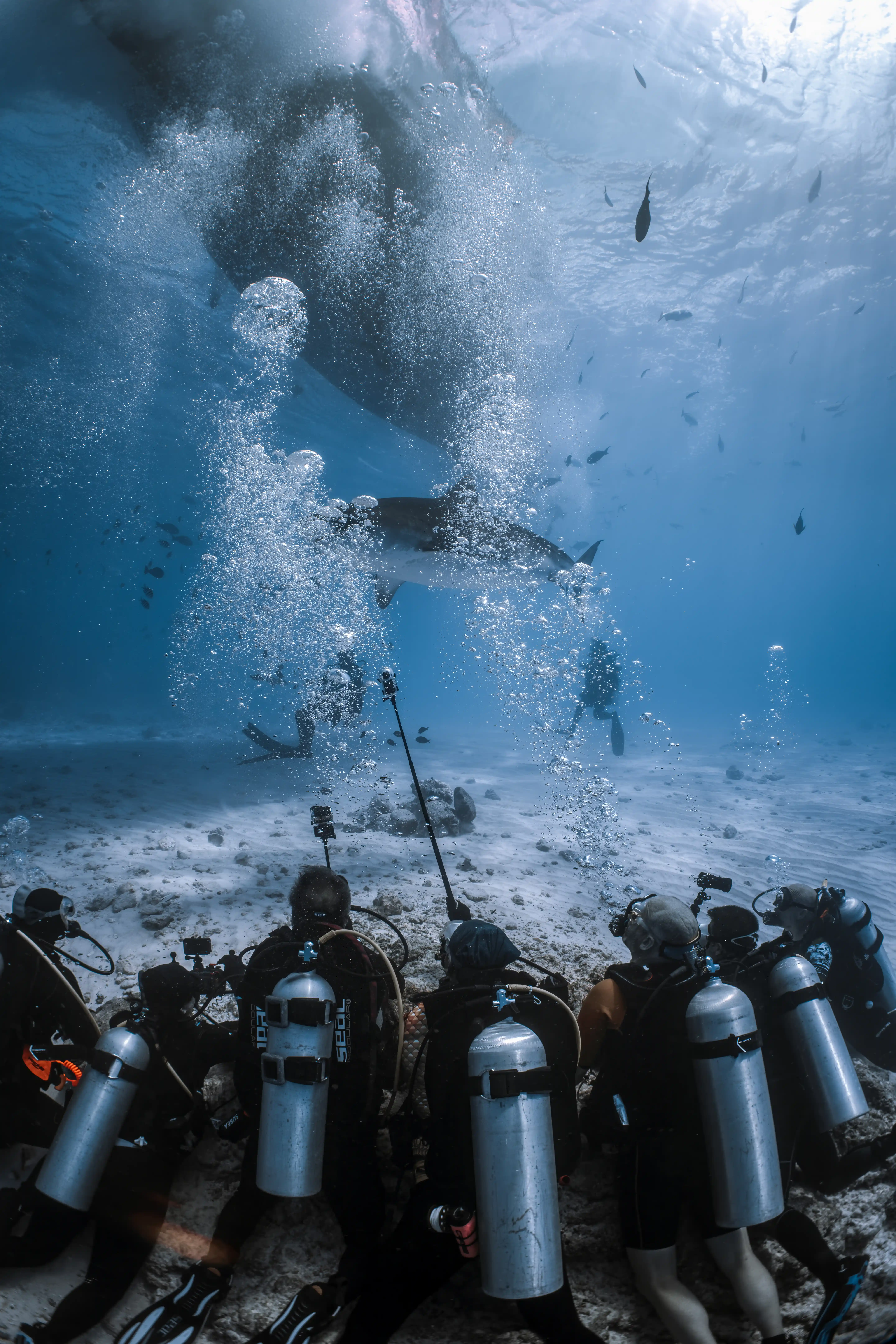
Where to See Hammerheads
Farikede is Fuvahmulah's signature hammerhead site - a deep southern plateau where washing-machine currents converge. It's rated Expert-level for a reason: the current is unpredictable and the depth drops fast. But when conditions align, it offers encounters with almost every apex species in a single dive.
Ganbithe Faro (Southwest Corner) comes alive with westward currents. Hammerheads and mantas glide along the ridge while schooling fish hug the reef for shelter. This site is more accessible than Farikede for experienced Advanced divers.
Our guides read conditions each morning and select the site most likely to produce encounters based on current direction, tide, and recent sighting history.
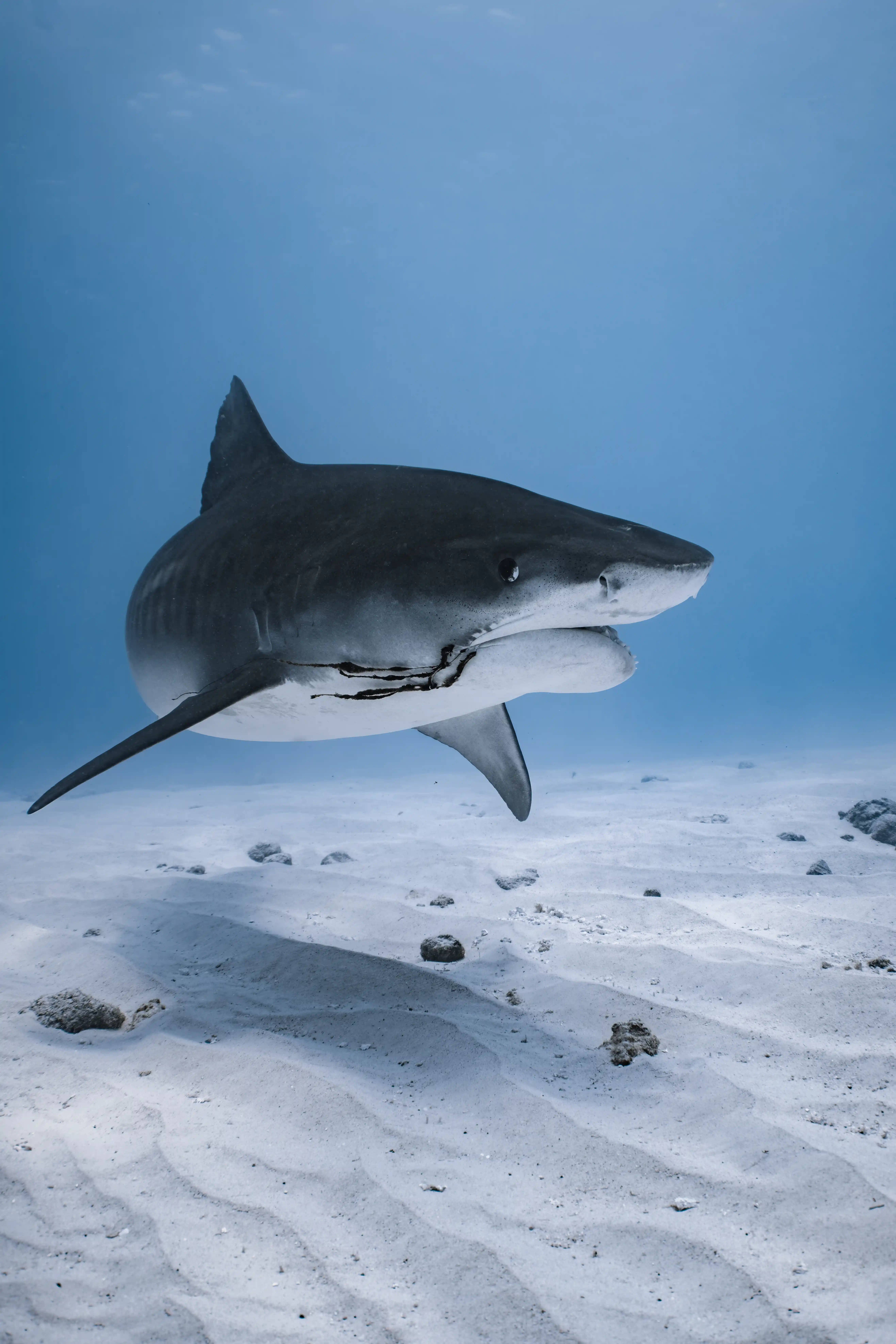
Critically Endangered, Locally Thriving
The scalloped hammerhead is Critically Endangered globally. Populations have declined by over 80% in many regions due to the fin trade. Fuvahmulah represents one of the healthier remaining populations in the Indian Ocean.
Every hammerhead encounter here is a conservation data point. Our guides log sighting numbers, school sizes, and depth to contribute to regional population monitoring. The Maldives' shark fishing ban (since 2010) is a key reason this population persists.
Diving responsibly with hammerheads at Fuvahmulah directly supports the economic case for shark protection - demonstrating that living sharks generate more revenue than dead ones.
Reproduction & Lifecycle
Viviparous with yolk-sac placenta. Females give birth to 15-30 pups after 9-10 months gestation. Pups are 42-55cm at birth. Sexual maturity at 15+ years for females. The extremely slow maturation combined with large litter sizes made hammerheads historically abundant — but equally vulnerable to overfishing. Their aggregating behaviour makes them easy targets for commercial fishing operations.
Feeding Ecology
The cephalofoil (hammer-shaped head) is a sensory platform. It contains an expanded distribution of ampullae of Lorenzini — electroreceptors that detect the electrical fields of prey buried in sand. Scalloped hammerheads hunt stingrays, octopus, squid, and reef fish. At Fuvahmulah, they cruise the thermocline where the temperature gradient concentrates prey. The schooling behaviour is primarily social — hunting happens individually or in small groups that break from the main formation.
Scalloped Hammerhead Shark Diving Worldwide
Cocos Island (Costa Rica) and Galapagos (Ecuador) are the world's most famous hammerhead destinations — massive schools of 200+ individuals in remote Pacific locations requiring liveaboard access. Layang-Layang (Malaysia) and Darwin Island also deliver schools. Fuvahmulah's schools are smaller (5-30 typically) but accessible from a local island dive centre without a liveaboard. The combination with tiger sharks, threshers, and mantas on the same trip is Fuvahmulah's unique advantage over dedicated hammerhead destinations.
Photography Tips
Common Mistakes
Practical Information
Dive Sites
- Farikede
- Ganbithe Faro
- Bilhi Feyshi
Best Time
October to April (peak schooling season)
Depth
20-30m along southern reef edges
Certification
Advanced Open Water minimum; Expert-level for Farikede
Common Questions
When is the best time to see hammerhead sharks at Fuvahmulah?
+
How large are the hammerhead schools at Fuvahmulah?
+
Is the hammerhead dive suitable for intermediate divers?
+
Can I see hammerheads and tiger sharks on the same trip?
+
Are scalloped hammerheads dangerous?
+
Fuvahmulah Dive Packages
5 to 10-night tiger shark diving packages with hotel and transfers included.
Diving Rates & Prices
Transparent pricing for shark dives, courses, equipment, and add-ons.
Tiger Sharks of Fuvahmulah
300+ named resident tiger sharks. Year-round encounters at Tiger Harbour.
Thresher Sharks of Fuvahmulah
Dawn cleaning station encounters with the elusive Pelagic Thresher.
Oceanic Whitetip Sharks
Open-ocean encounters with the critically endangered oceanic whitetip.
Manta Rays of Fuvahmulah
Oceanic manta encounters - Fuvahmulah hosts 80% of Maldives sightings.