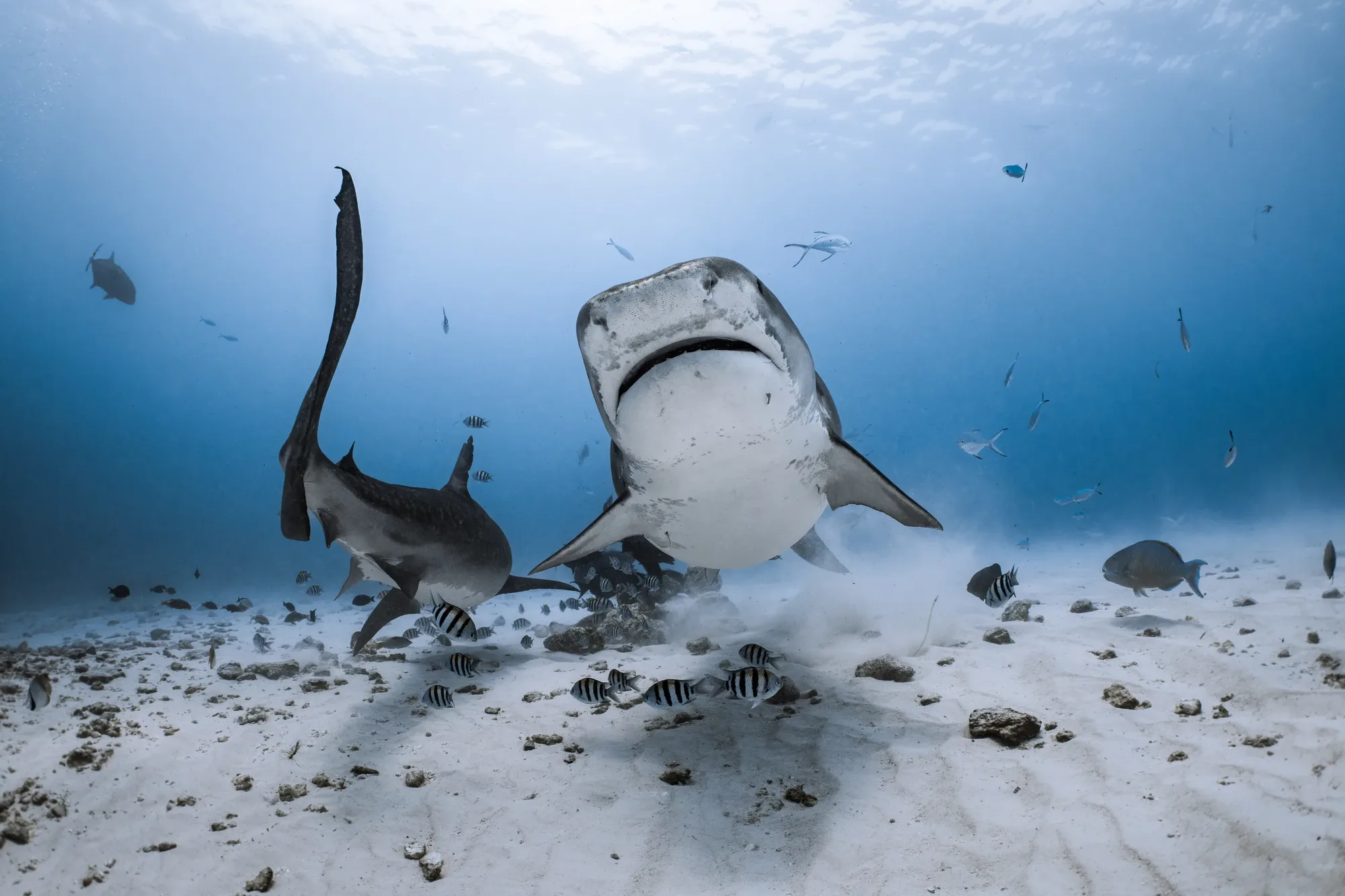
Meet Galeocerdo cuvier
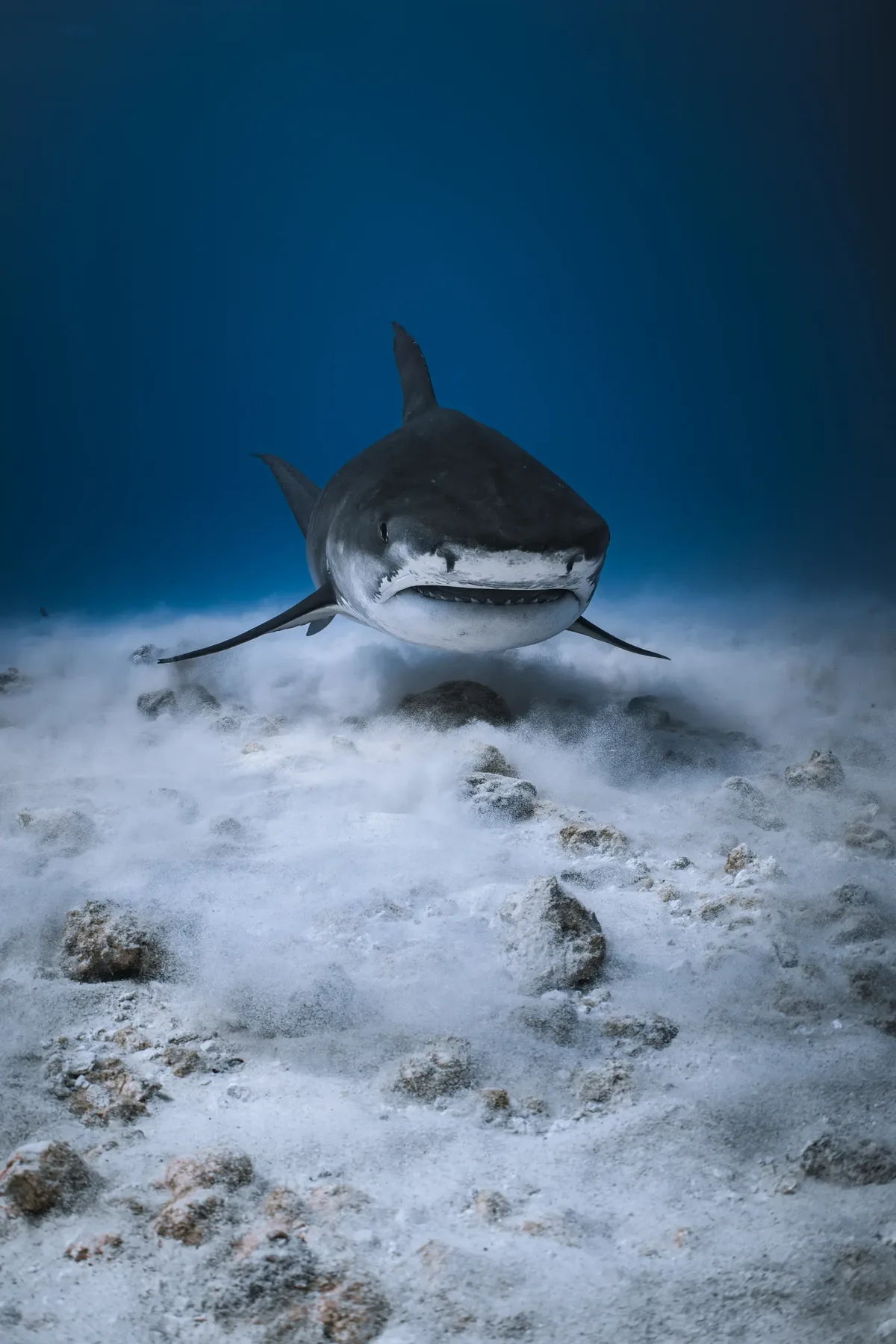
Species Data
- Scientific name
- Galeocerdo cuvier
- Family
- Carcharhinidae (requiem sharks)
- Adult length
- 3.0-4.5m (max recorded ~5.5m)
- Adult weight
- 385-635 kg average
- Lifespan
- 30-50 years
- Diet
- Opportunistic - fish, cephalopods, turtles, carrion
- IUCN status
- Near Threatened (global population declining)
- Distinguishing marks
- Vertical dark stripes on juveniles (fade with age); broad blunt snout; robust build
Behaviour at Tiger Harbour - from daily observation
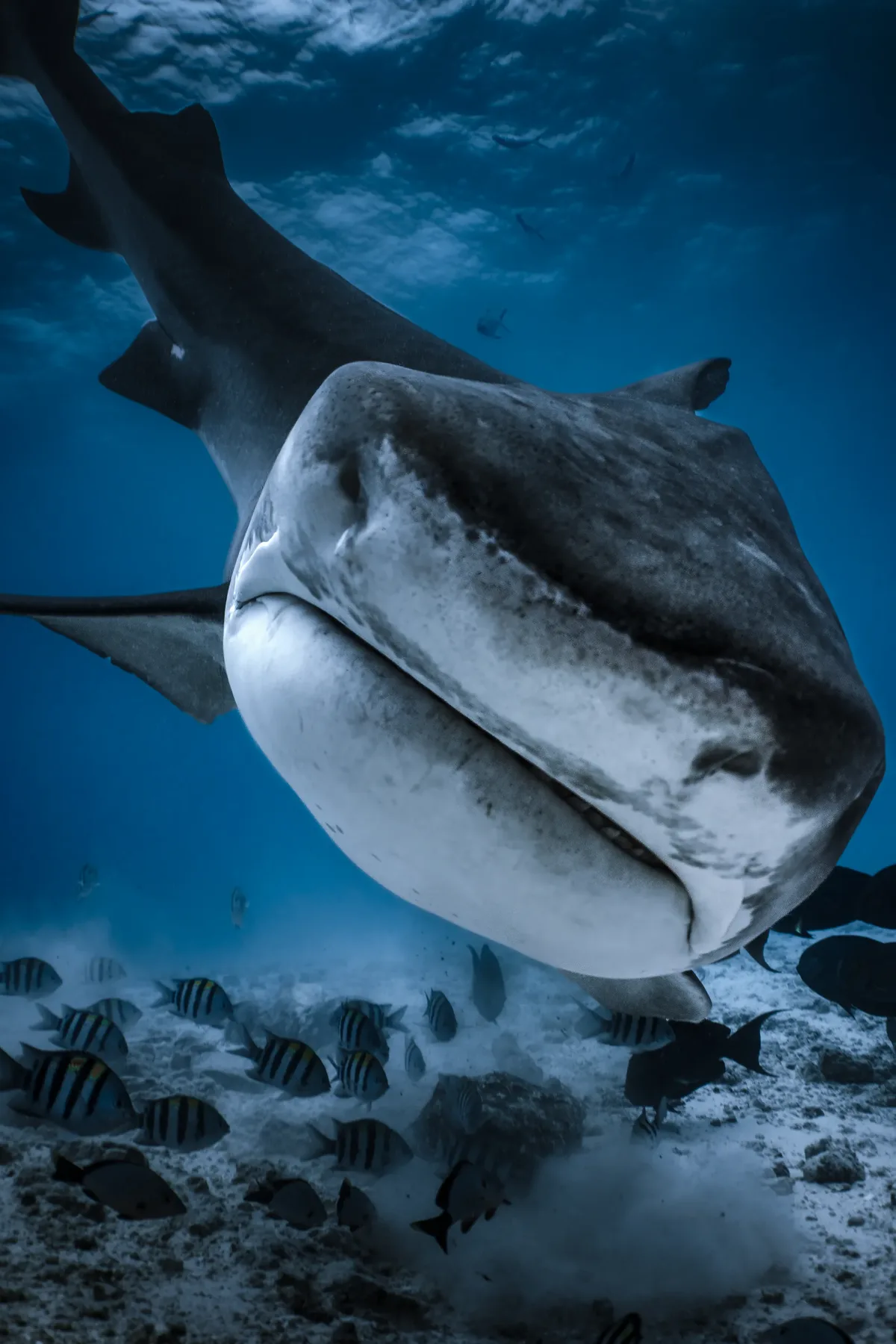
Slow, deliberate, cautious. Tiger sharks are investigators - they use their senses to assess before committing. At Tiger Harbour, we see distinct personalities: bold individuals who approach within a metre, and shy animals who stay distant. Large females clearly dominate the best positions on the plateau. Over years of daily diving, our guides know each shark by name, recognise behavioural shifts, and track site fidelity across seasons.
Why Tiger Sharks Choose Fuvahmulah
Fuvahmulah's tiger shark population exists because of a centuries-old pattern. Local fishermen have been cleaning their catch at the harbour entrance for as long as anyone can remember, discarding offcuts into the water at the same spot every day. Over generations, tiger sharks learned the schedule.
A resident population established itself - not because of tourism, but because of the fishermen. Today, we dive alongside a feeding tradition that predates dive tourism by decades. The sharks aren't baited into appearing. They're already there.
This is what makes Fuvahmulah fundamentally different from every other tiger shark destination. Tiger Beach in the Bahamas uses bait boxes. Beqa Lagoon in Fiji hand-feeds. At Tiger Harbour, we dive with a natural pattern, not against one.
A Population You Know by Name
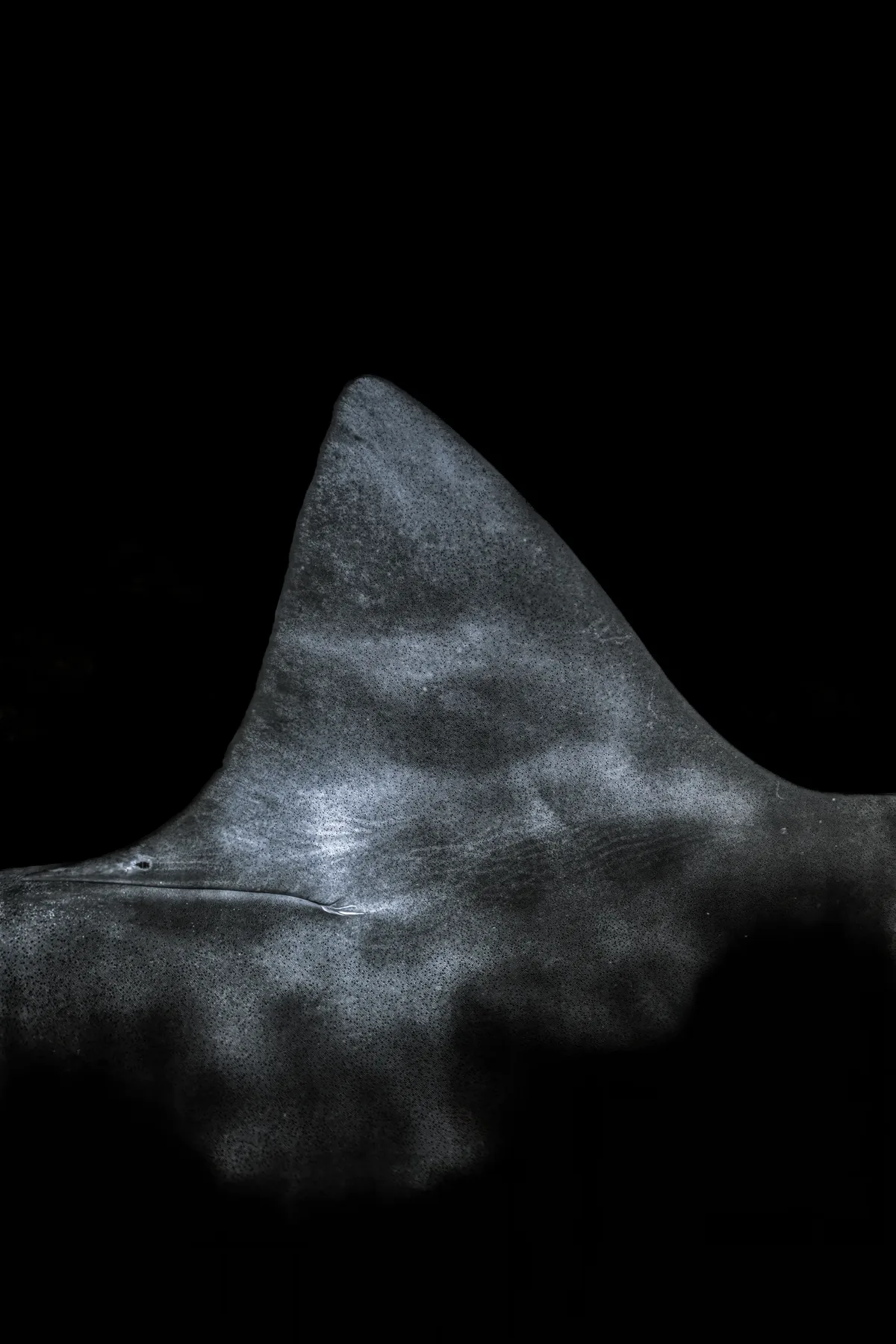
Tiger sharks are individually identifiable by natural markings - fin shape, body scarring, and unique patterns on the tail and flanks. Over years of daily diving at Tiger Harbour, our team has catalogued and named more than 300 individual animals.
We log every sighting. We track site fidelity. We notice behavioural changes. We know which sharks arrive at which time of day, which are dominant, which are shy, which have new scars. Many of our repeat guests come back and recognise the same animals they met on a previous trip.
This isn't marketing - it's the foundation of our conservation program. The ID database supports long-term population monitoring and contributes to regional shark research.
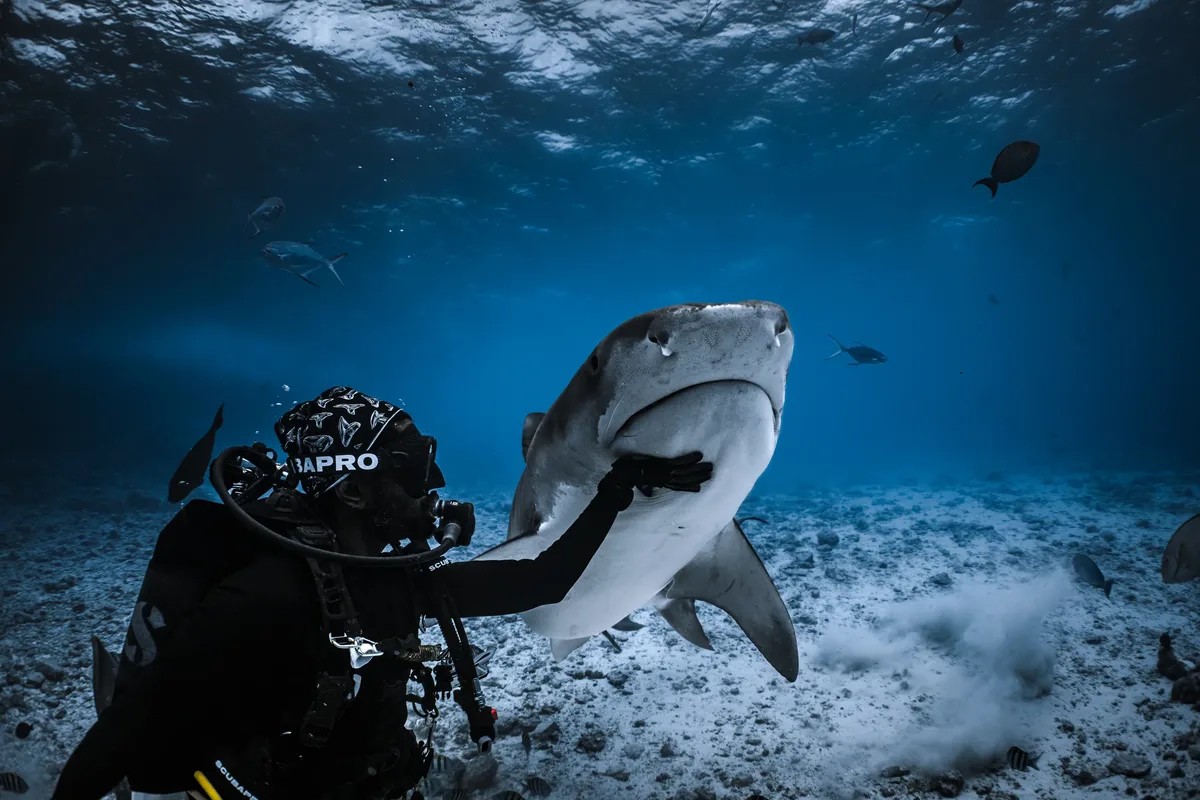
Diving with Tiger Sharks at Tiger Harbour
The dive happens at Merika Falhagando (Tiger Harbour) - a sandy plateau just outside the harbour entrance on Fuvahmulah's south-east coast. At 6-8 metres of clear, warm water, it is one of the most accessible tiger shark dives on Earth.
Back-roll entry from the dhoni, controlled descent to the sandy plateau. Settle into position before any sharks arrive. The group stays compact and stationary. Tiger sharks arrive individually or in small groups. You remain on the sand. Sharks circle, approach, and pass - sometimes within a metre. The encounter typically lasts 30-45 minutes.
Most guests dive Tiger Harbour 3-6 times across a 5-10 night package. Each dive is different - different sharks, different behaviours, different light. By your third dive you'll start recognising individuals.
Reproduction & Lifecycle
Ovoviviparous. Females give birth to 10-80 pups after 14-16 months gestation. Pups are 50-75cm at birth. Sexual maturity at 7-10 years. Females reproduce every 2-3 years. The Fuvahmulah population includes juveniles, sub-adults, and mature adults — indicating a healthy, self-sustaining community.
Feeding Ecology
Tiger sharks are the ocean's ultimate generalists. At Fuvahmulah, their diet includes reef fish, cephalopods, sea turtles, seabirds, and carrion from the harbour fish waste. Their serrated teeth can cut through turtle shells and bone. They hunt primarily by ambush and investigation — slowly approaching potential food and testing it with a bump or investigatory bite before committing. This cautious feeding strategy is why the Tiger Harbour encounter works: the sharks assess divers as non-food and lose interest.
Tiger Shark Diving Worldwide
Tiger Beach (Bahamas) uses bait boxes to attract transient tiger sharks in open sand — encounters are impressive but rely on active baiting. Beqa Lagoon (Fiji) hand-feeds multiple shark species including bulls and tigers — high adrenaline but controversial ethics. Aliwal Shoal (South Africa) offers seasonal tiger encounters in murky water. Fuvahmulah is unique: a resident population tied to a natural feeding pattern, no hand-feeding, year-round consistency, and the shallowest encounter depth (6-8m) of any major tiger shark destination.
Photography Tips
Common Mistakes
Practical Information
Dive Sites
- Merika Falhagando (Tiger Harbour)
- Bilhi Feyshi
- Kudhu Falhagando
Best Time
Year-round (tiger sharks are present every day)
Depth
6-8m at Tiger Harbour
Certification
Open Water minimum for Tiger Harbour; Advanced Open Water for deeper sites
Common Questions
How many tiger sharks will I see on a single dive?
+
Are tiger sharks dangerous to divers?
+
What's the best time of year to see tiger sharks at Fuvahmulah?
+
Do you hand-feed the tiger sharks?
+
What certification do I need for the tiger shark dive?
+
Fuvahmulah Dive Packages
5 to 10-night tiger shark diving packages with hotel and transfers included.
Diving Rates & Prices
Transparent pricing for shark dives, courses, equipment, and add-ons.
Thresher Sharks of Fuvahmulah
Dawn cleaning station encounters with the elusive Pelagic Thresher.
Hammerhead Sharks of Fuvahmulah
Schooling scalloped hammerheads at Fuvahmulah's deep southern sites.
Oceanic Whitetip Sharks
Open-ocean encounters with the critically endangered oceanic whitetip.
Manta Rays of Fuvahmulah
Oceanic manta encounters - Fuvahmulah hosts 80% of Maldives sightings.