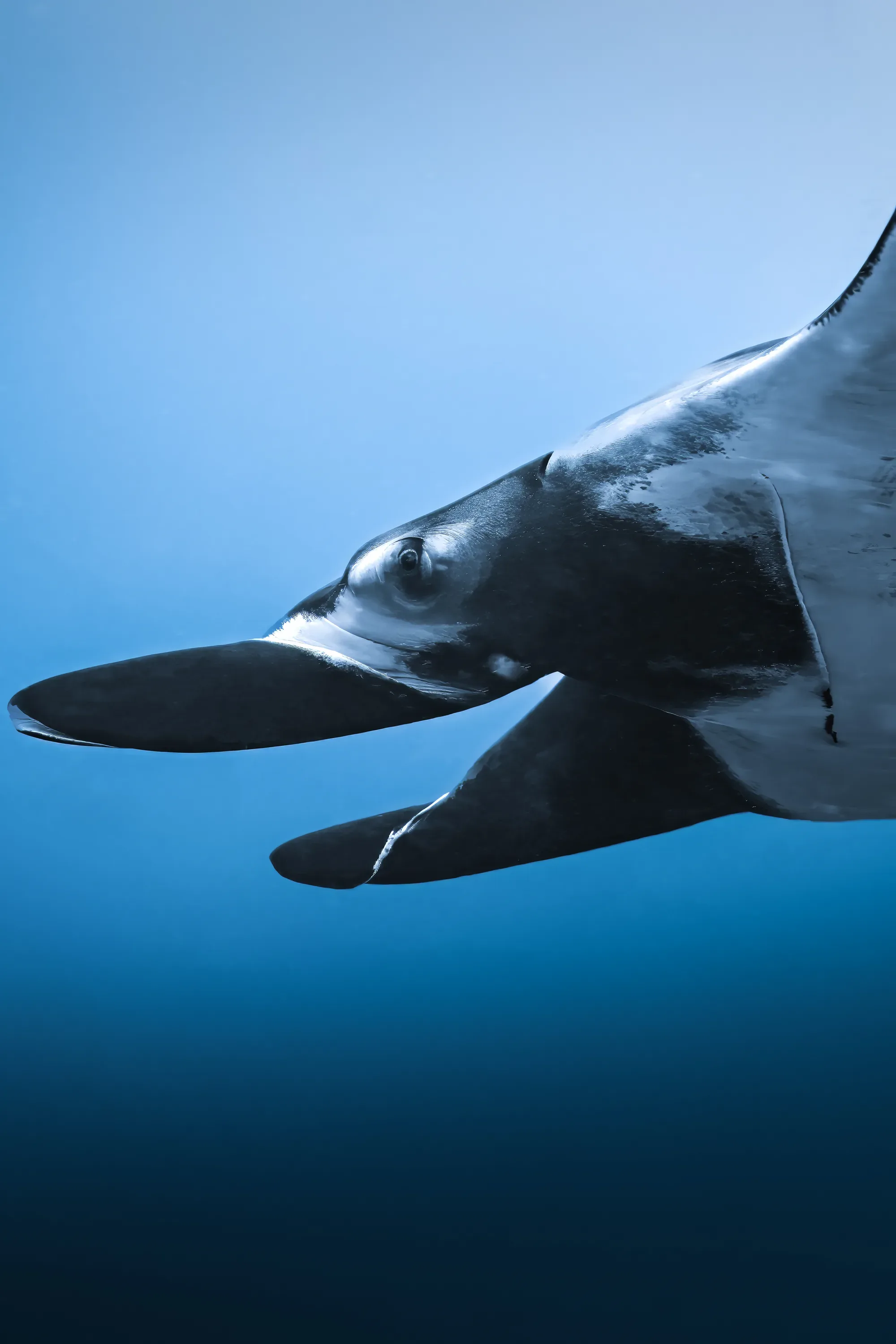
Meet Mobula birostris
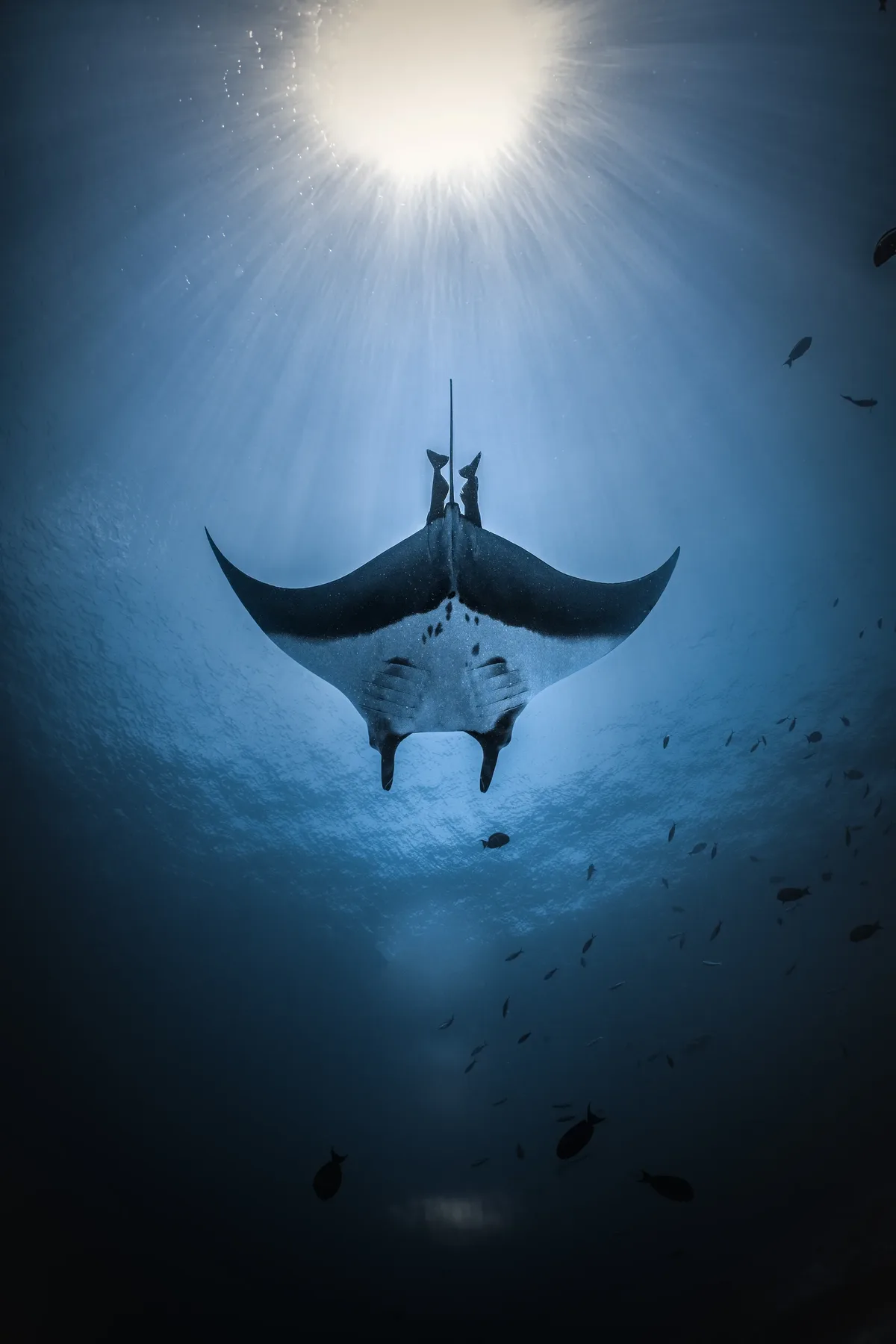
Species Data
- Scientific name
- Mobula birostris
- Family
- Mobulidae (devil rays)
- Adult length
- 5-7m wingspan (max recorded 9m)
- Adult weight
- 1,000-2,000 kg
- Lifespan
- 40-70 years
- Diet
- Zooplankton, small fish (filter feeder)
- IUCN status
- Endangered (slow reproduction, vulnerable to bycatch)
- Distinguishing marks
- Enormous triangular pectoral fins; cephalic fins (horn-like); dark dorsal with distinctive white shoulder markings unique to each individual; white ventral surface
Manta behaviour at Fuvahmulah
Oceanic mantas at Fuvahmulah display both feeding and mating behaviours depending on season. During feeding, they execute barrel rolls through plankton-rich water columns - a mesmerising spiralling motion with mouth wide open. During mating season (March-May), males pursue females in 'manta trains' - chains of 3-8 males following a single female for hours. The scale is breathtaking. Individual mantas are identified by their unique ventral markings, and our guides contribute sighting data to the Maldives Manta Ray Project.
Why Fuvahmulah is the Manta Capital
Fuvahmulah's position as an isolated oceanic island creates a nutrient convergence zone. Deep-water upwellings bring plankton-rich water to the surface, and oceanic mantas gather where the food concentrates - along the island's reef edges and in the channels between dive sites.
The estimated 80% share of all Maldives manta sightings is staggering. While many atolls see the smaller reef manta (Mobula alfredi), Fuvahmulah consistently delivers encounters with the oceanic species - the true giant, with wingspans reaching 5-7 metres.
The distinction matters. Oceanic mantas are genuinely open-ocean animals. They travel vast distances and don't stay at specific cleaning stations in the way reef mantas do. Their concentration at Fuvahmulah reflects the island's unique position as a feeding and breeding aggregation site.
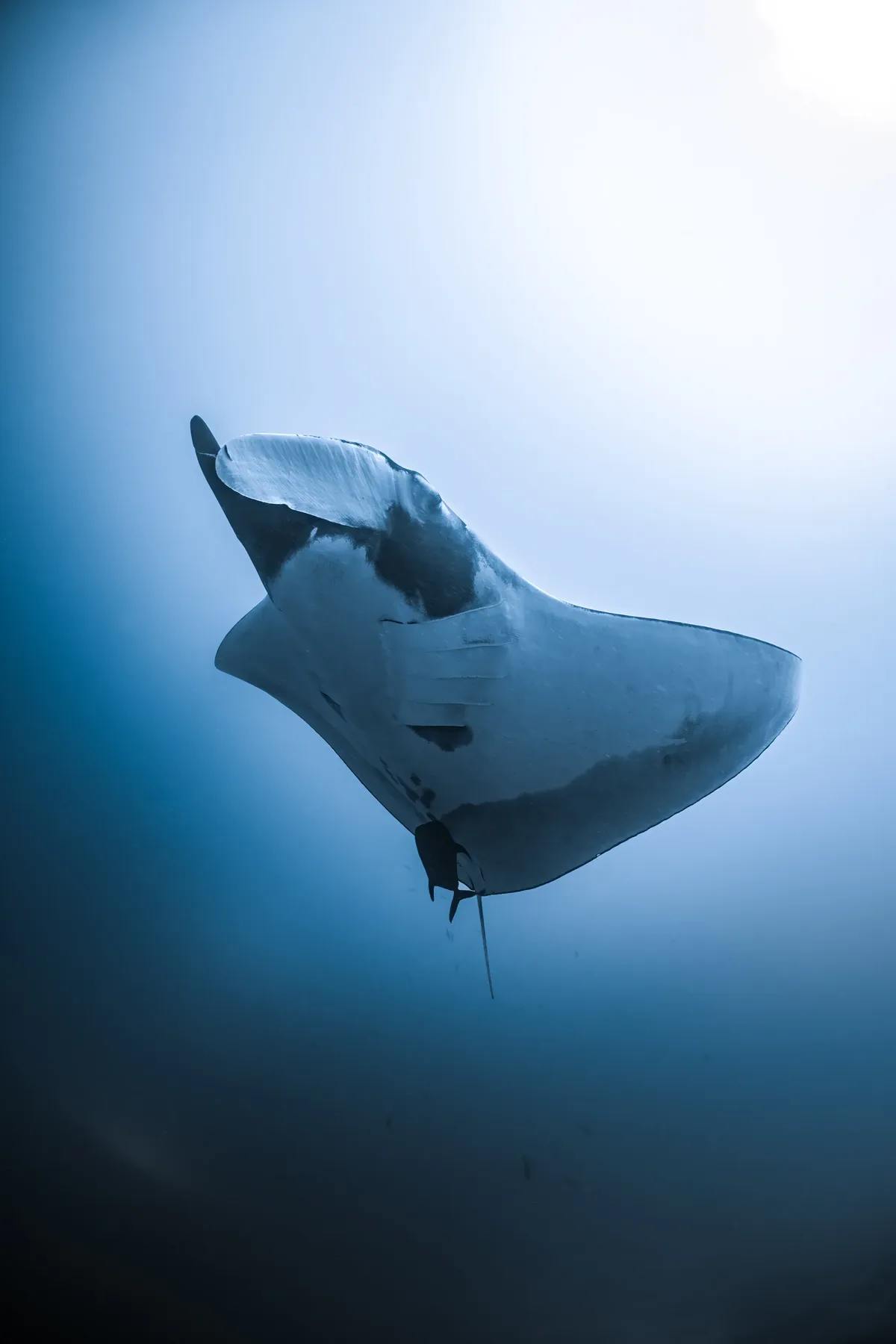
The Mating Spectacle
March through May is manta mating season at Fuvahmulah. Males pursue females in 'manta trains' - chains of 3-8 males following a single female, sometimes for hours. The trains move along the reef edge in a slow, spiralling procession.
The scale of a mating train is unlike anything else in diving. These are 1-2 tonne animals, wingspans of 5+ metres, moving in formation just metres from the reef wall. It is one of the great wildlife spectacles on Earth - and it happens at recreational diving depths.
Outside mating season, mantas are still present but in lower concentrations. Feeding behaviour (barrel rolls through plankton columns) is observed year-round, particularly during plankton blooms triggered by current shifts.
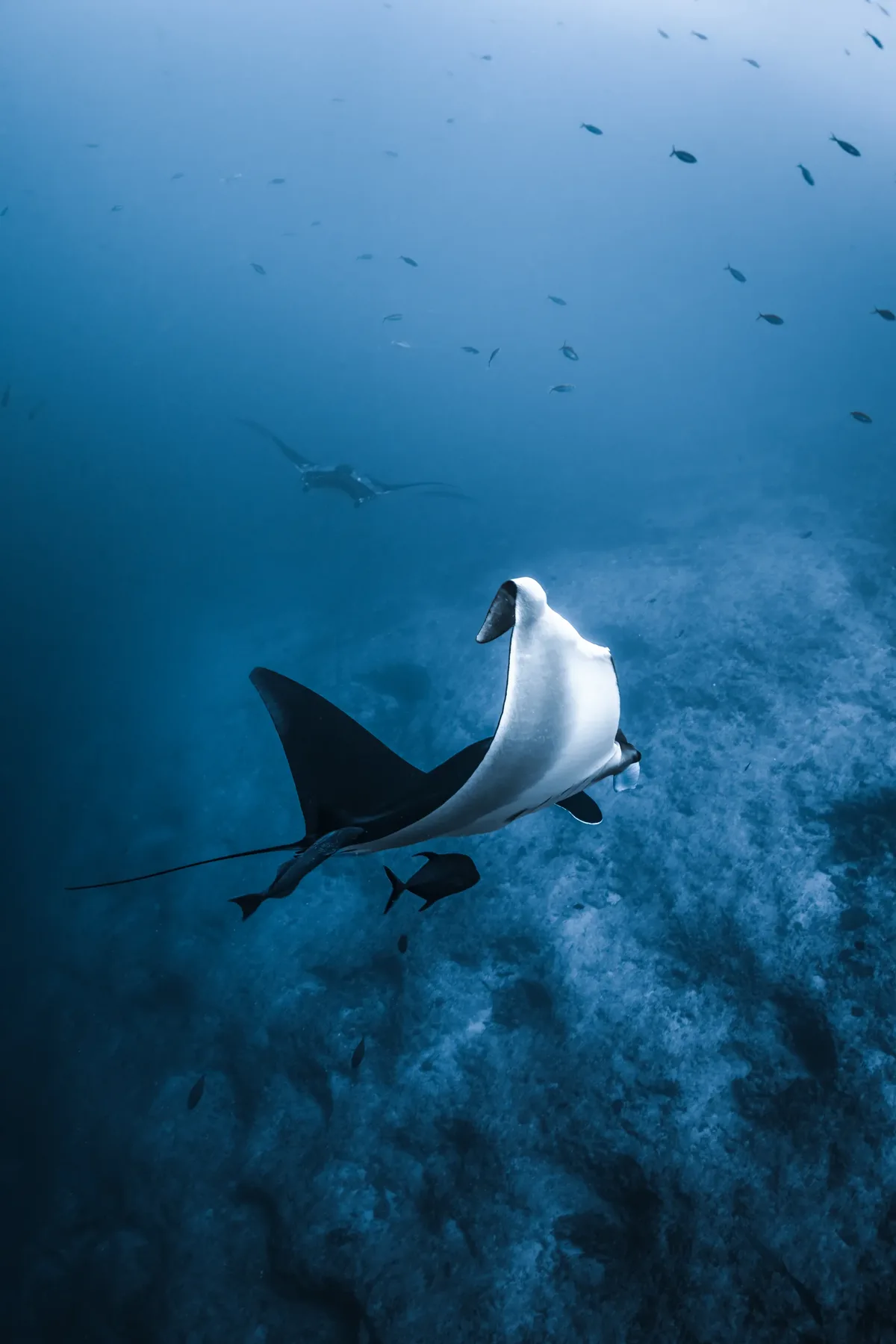
Endangered but Protected
Oceanic mantas are Endangered globally. Their extremely slow reproduction - females produce a single pup every 2-5 years after 12-13 months gestation - makes them catastrophically vulnerable to any fishing pressure. Even low levels of bycatch mortality can push populations toward collapse.
The Maldives declared all manta rays protected species in 2014, building on the 2010 shark fishing ban. Fuvahmulah's dive tourism provides direct economic support for this protection by demonstrating the value of living mantas to the local economy.
Our guides contribute sighting data - including individual ID from ventral markings - to the Maldives Manta Ray Project, supporting long-term population monitoring across the archipelago.
Reproduction & Lifecycle
The slowest reproduction of any ray species. Females produce a single pup every 2-5 years after 12-13 months gestation. Pups are 1.2-1.5m wingspan at birth — already large enough to be relatively safe from predators. Sexual maturity at 8-10 years. This extremely slow reproduction makes oceanic mantas catastrophically vulnerable to any fishing pressure — even low levels of bycatch can cause population decline.
Feeding Ecology
Oceanic mantas are filter feeders — they swim with mouths wide open through plankton-rich water, using their cephalic fins to funnel zooplankton and small fish into their gill rakers. At Fuvahmulah, they execute barrel rolls through plankton columns concentrated by upwelling currents — spiralling vertically with mouths open. This feeding behaviour is mesmerising to watch and can last for extended periods when plankton density is high. They consume 12-15% of their body weight weekly.
Oceanic Manta Ray (Giant Manta) Diving Worldwide
South Ari Atoll (Maldives) is the classic manta destination — year-round reef manta (Mobula alfredi) encounters at cleaning stations. But these are the smaller reef species. Fuvahmulah delivers the oceanic giant (Mobula birostris) — significantly larger, open-ocean animals that are genuinely rare globally. Socorro (Mexico), Isla de la Plata (Ecuador), and Mozambique also produce oceanic manta encounters. Fuvahmulah's advantage: accessible from a local island, no liveaboard needed, and combined with 7+ shark species on the same trip.
Photography Tips
Common Mistakes
Practical Information
Dive Sites
- Farikede
- Ganbithe Faro
- Kudhu Falhagando
- Southern reef channels
Best Time
March-May (mating season peak); year-round for feeding encounters
Depth
15-30m along reef edges
Certification
Advanced Open Water; comfort with currents
Common Questions
When is the best time to see manta rays at Fuvahmulah?
+
How big are the manta rays at Fuvahmulah?
+
Can I snorkel with manta rays at Fuvahmulah?
+
Are manta rays dangerous?
+
Can I see mantas and tiger sharks on the same dive trip?
+
Fuvahmulah Dive Packages
5 to 10-night tiger shark diving packages with hotel and transfers included.
Diving Rates & Prices
Transparent pricing for shark dives, courses, equipment, and add-ons.
Tiger Sharks of Fuvahmulah
300+ named resident tiger sharks. Year-round encounters at Tiger Harbour.
Thresher Sharks of Fuvahmulah
Dawn cleaning station encounters with the elusive Pelagic Thresher.
Hammerhead Sharks of Fuvahmulah
Schooling scalloped hammerheads at Fuvahmulah's deep southern sites.
Oceanic Whitetip Sharks
Open-ocean encounters with the critically endangered oceanic whitetip.