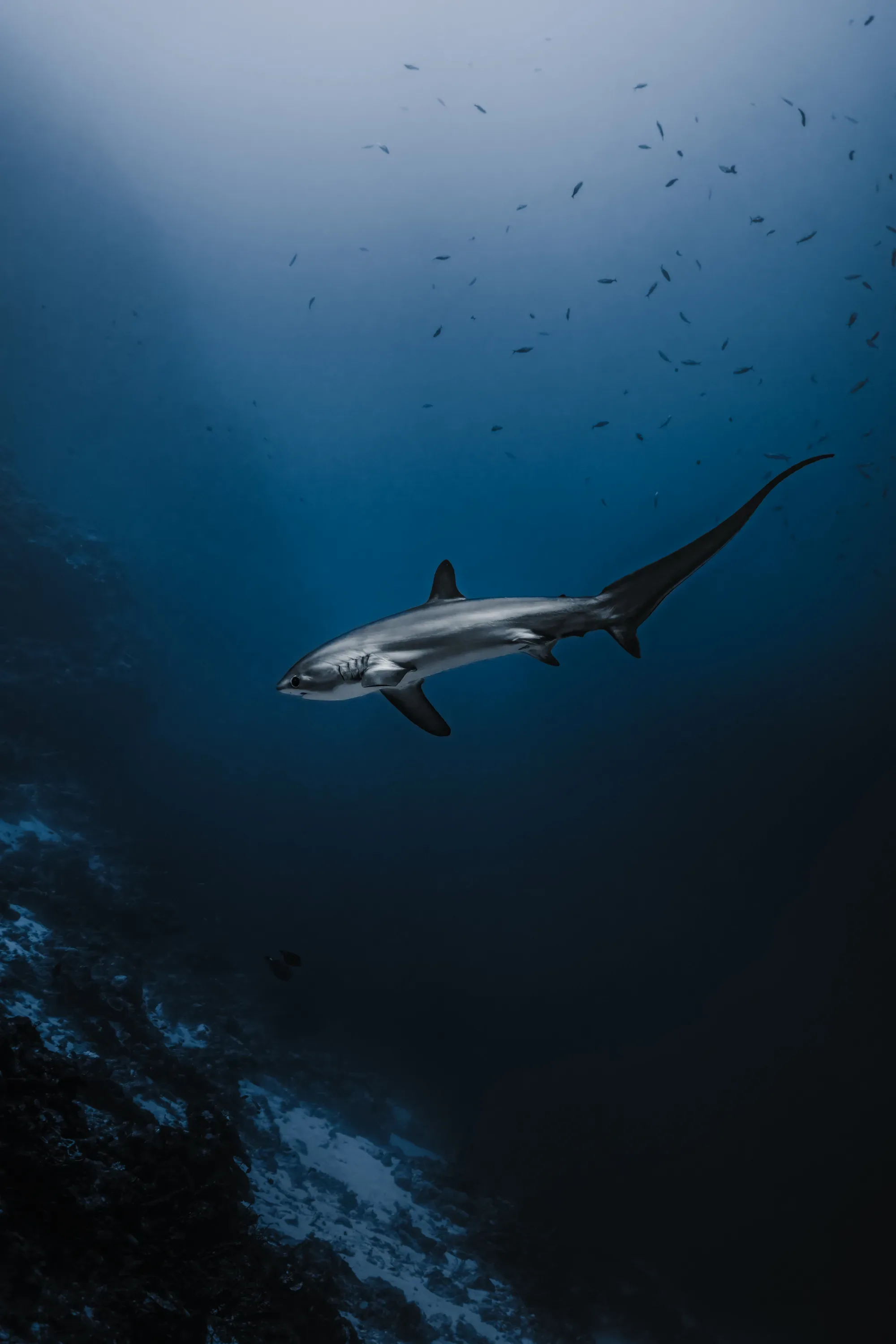
Meet Alopias pelagicus
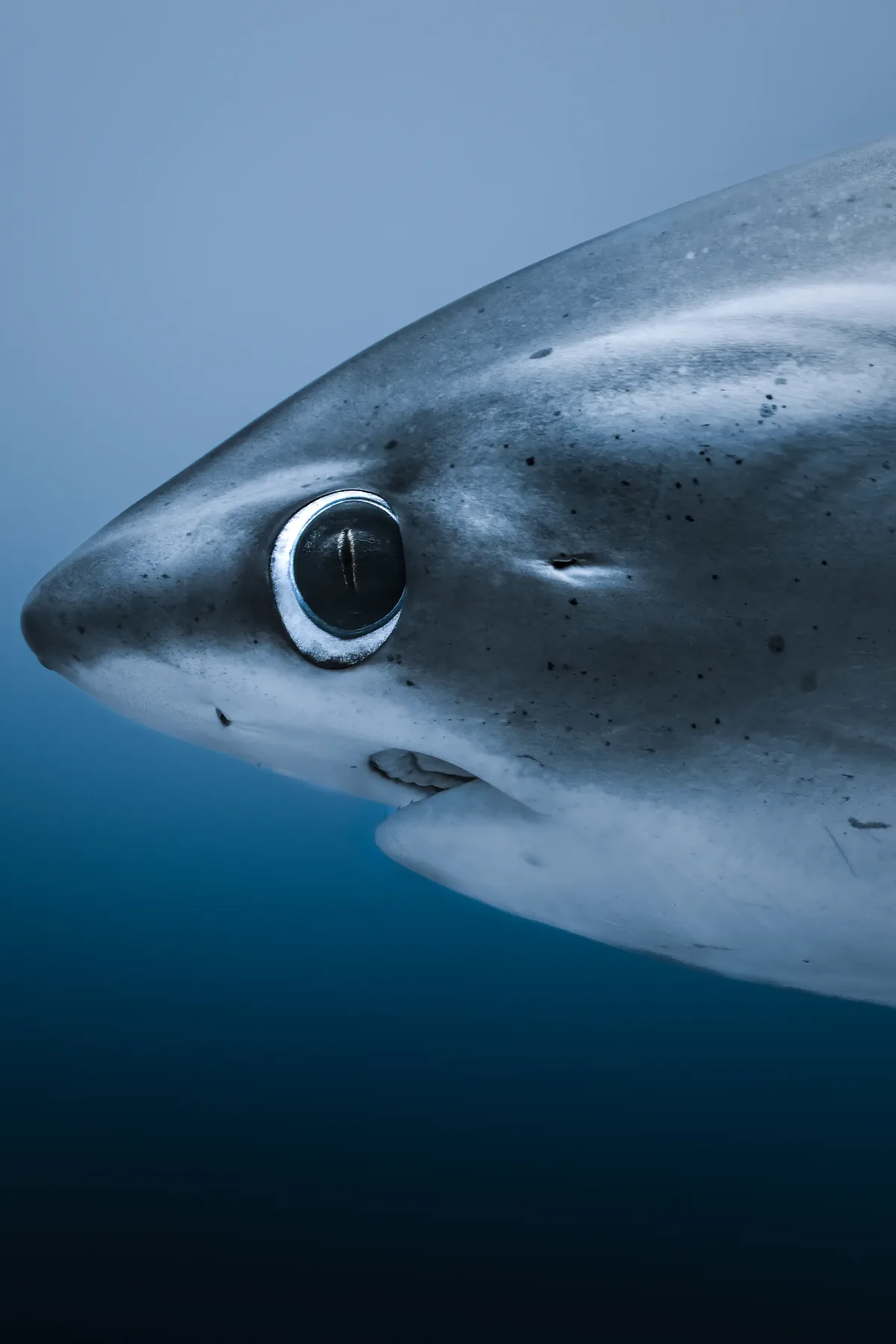
Species Data
- Scientific name
- Alopias pelagicus
- Family
- Alopiidae (thresher sharks)
- Adult length
- 3-4m including tail (body ~1.5-2m)
- Adult weight
- 70-90 kg average
- Lifespan
- 20-30 years
- Diet
- Small pelagic fish, squid (tail used to stun prey)
- IUCN status
- Vulnerable (population declining globally)
- Distinguishing marks
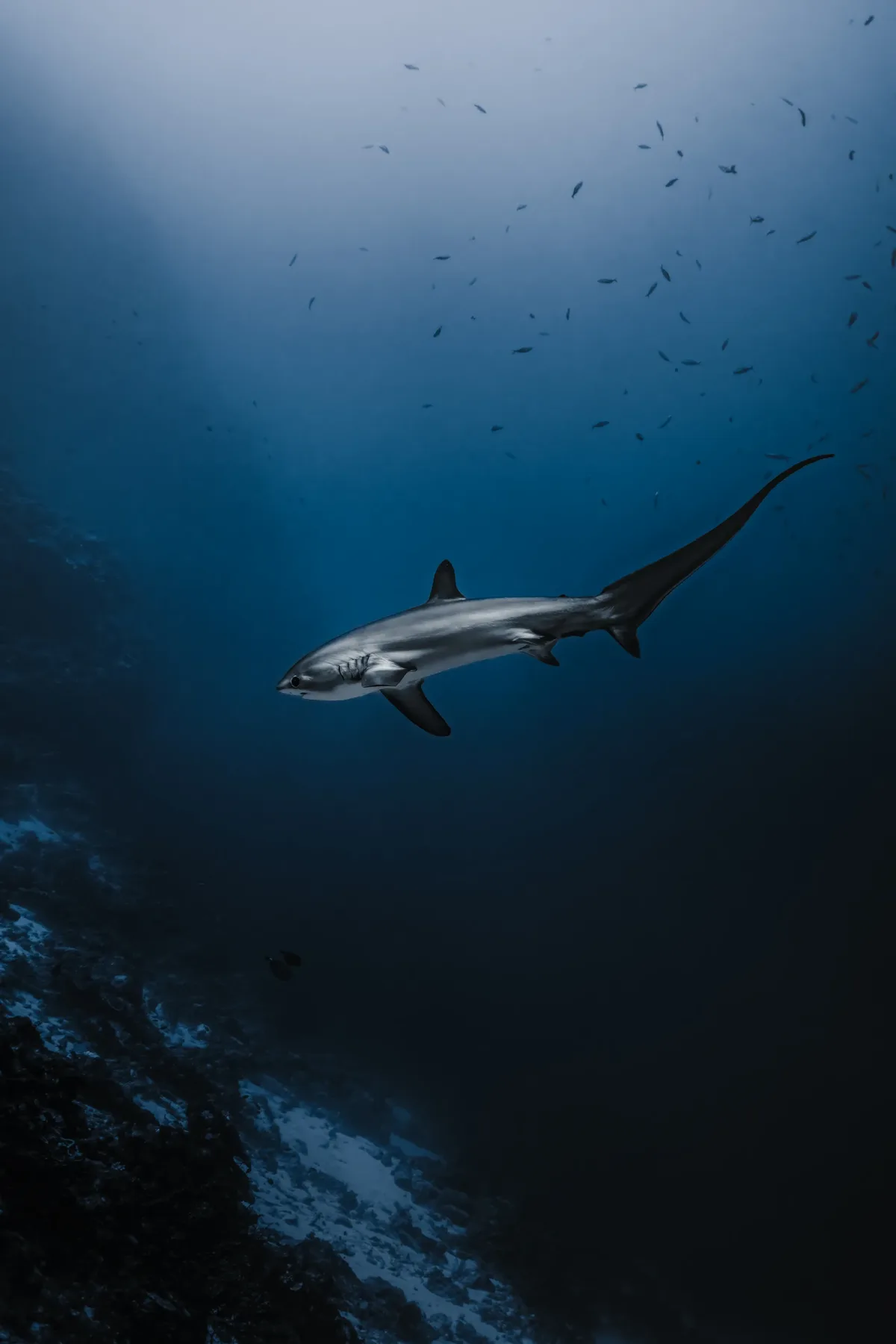
- Extraordinarily long upper caudal lobe (~50% of total length); very large eyes; metallic silver-blue colouring; dark patches above pectoral fins
Behaviour at cleaning stations - from daily observation
Extremely shy and sensitive to disturbance. Threshers ascend from deep water at dawn to visit cleaning stations where wrasse remove parasites from their skin and gills. During cleaning they enter a trance-like state, swimming in slow circles with tails lowered. Any sudden movement, bubble noise, or flash photography will cause them to vanish instantly back into the deep. Passive observation is the only way to sustain an encounter.
Why Fuvahmulah is the Thresher Capital
While most divers travel to the Philippines for Thresher Sharks, Fuvahmulah has quietly emerged as a world-class alternative offering something unique: size and solitude.
Fuvahmulah is geologically unique in the Maldives - a one-island atoll that rises vertically from the ocean floor, reaching depths of over 2,000 metres just a few hundred metres from shore. This vertical wall creates upwellings that bring nutrient-rich cold water to the surface, drawing cleaning stations into accessible recreational depths.
The Pelagic Threshers found here tend to be larger, bolder, and are often seen alongside other pelagic species like hammerheads and silvertips, making every dawn dive a potential multi-species encounter.
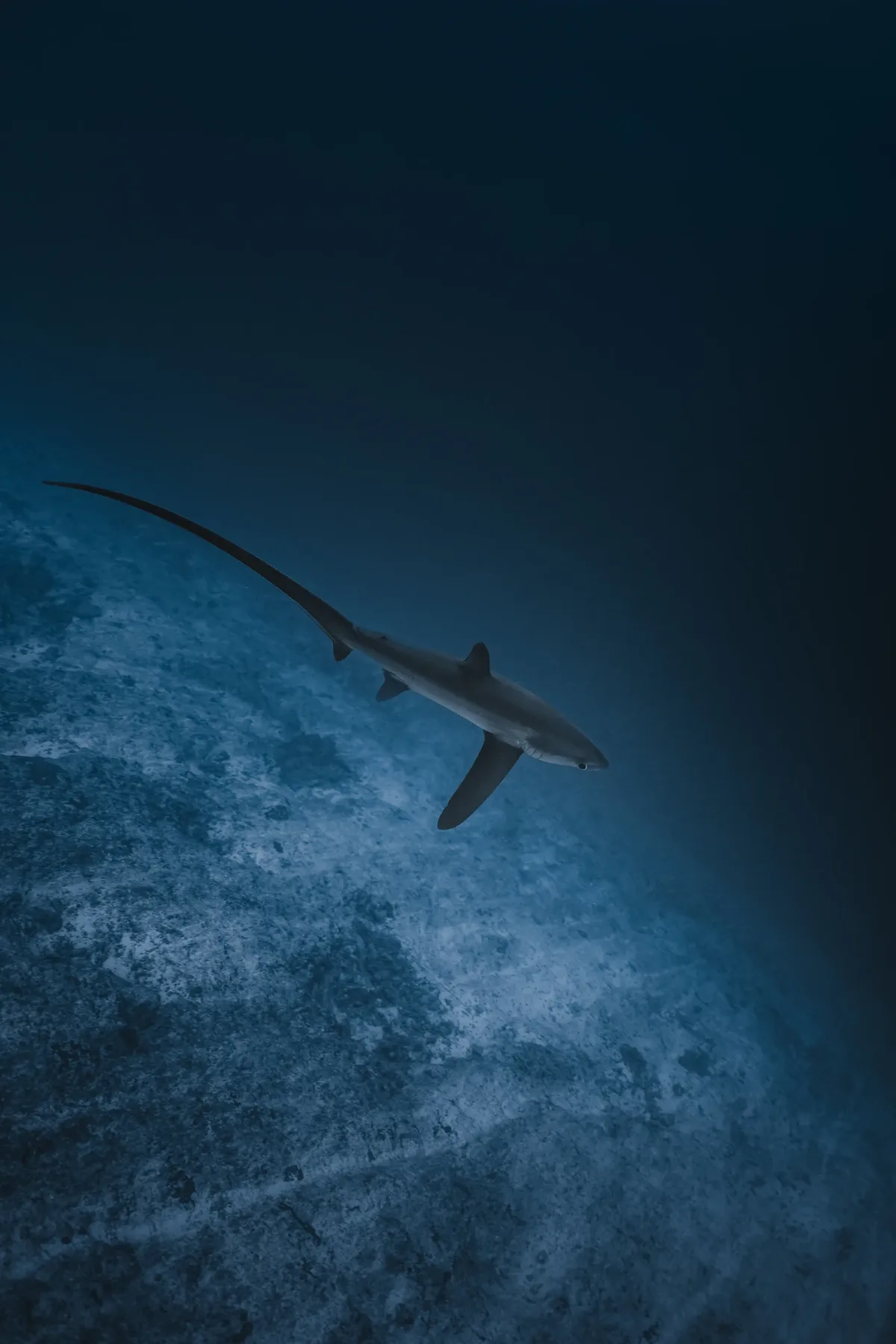
The Morning Ritual
Every morning just after sunrise, Thresher Sharks ascend from the deep (200m+) to visit cleaning stations located on reef ledges at 15-30 metres depth.
Specialised cleaner wrasse fish perform a vital service, removing parasites from the sharks' skin, gills, and even inside their mouths. During this process the sharks slow to near-stall speed, swimming in tight circles with pectoral fins dropped - a signal of passive, non-threatening behaviour.
This is the golden moment for divers. The cleaning trance allows close observation as long as strict dive protocols are followed: minimal movement, no flash, stay below or at eye level, and never block the shark's escape route upward.
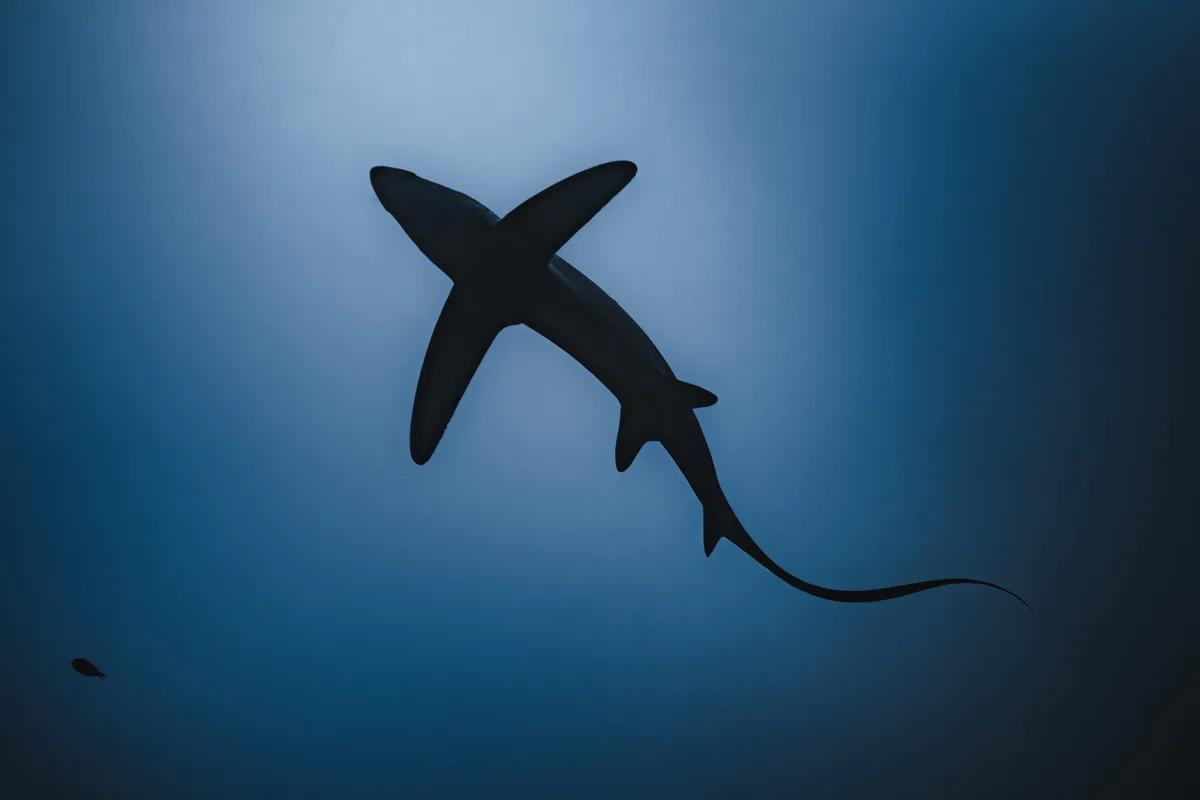
Navigating the North
The best sites for thresher shark encounters are Thoondu and One Palm, located on the north-east tip of the island. These sites feature sloping reefs with active cleaning stations at recreational depths (15-30m).
Threshers are also frequently spotted at cleaning stations along the east coast reefs. Our guides know the current hotspots and rotate sites based on seasonal conditions and recent sighting patterns.
Unlike the tiger shark dive at 6-8m, thresher dives require Advanced Open Water certification and comfort with depth and mild currents. The early morning timing means the first dive of the day is dedicated to the thresher search.
Reproduction & Lifecycle
Ovoviviparous with uterine cannibalism — embryos consume unfertilised eggs in the womb (oophagy). Litters of 2-4 pups after 9-12 months gestation. Pups are 150-160cm at birth (already large due to the nutrient-rich diet in the womb). Sexual maturity at 8-14 years. Extremely slow reproduction makes them highly vulnerable to population decline.
Feeding Ecology
Pelagic threshers hunt using their extraordinary tail. They accelerate toward schools of small fish and whip their tail over their head at speeds up to 80 km/h, stunning multiple prey at once. This tail-slap hunting technique is unique among sharks and has been filmed at Fuvahmulah. They primarily target small schooling fish (sardines, herring) and squid in the mesopelagic zone (200-500m depth), ascending to shallow cleaning stations at dawn.
Pelagic Thresher Shark Diving Worldwide
Malapascua (Philippines) is the world's most famous thresher destination — dedicated cleaning stations at Monad Shoal, high encounter rates, but crowded with 20-30 divers per station. Fuvahmulah offers larger individuals, less crowding, and multi-species encounters on the same dive (threshers + hammerheads + silvertips). Donsol (Philippines) and Cocos Island (Costa Rica) also produce thresher sightings but less reliably than Fuvahmulah's dedicated cleaning stations.
Photography Tips
Common Mistakes
Practical Information
Dive Sites
- Thoondu
- One Palm
- East Coast Reefs
Best Time
Year-round at dawn, peak activity December-April (dry season)
Depth
15-30m at cleaning stations
Certification
Advanced Open Water with drift diving experience
Common Questions
When is the best time to see Thresher Sharks in Fuvahmulah?
+
How do Fuvahmulah's threshers compare to Malapascua in the Philippines?
+
Can I use flash photography with thresher sharks?
+
What certification do I need for the thresher shark dive?
+
How many dives are dedicated to thresher shark searching?
+
Fuvahmulah Dive Packages
5 to 10-night tiger shark diving packages with hotel and transfers included.
Diving Rates & Prices
Transparent pricing for shark dives, courses, equipment, and add-ons.
Tiger Sharks of Fuvahmulah
300+ named resident tiger sharks. Year-round encounters at Tiger Harbour.
Hammerhead Sharks of Fuvahmulah
Schooling scalloped hammerheads at Fuvahmulah's deep southern sites.
Oceanic Whitetip Sharks
Open-ocean encounters with the critically endangered oceanic whitetip.
Manta Rays of Fuvahmulah
Oceanic manta encounters - Fuvahmulah hosts 80% of Maldives sightings.