Location
Deep South Plateau
Depth
30m+
Difficulty
Expert
Key Species
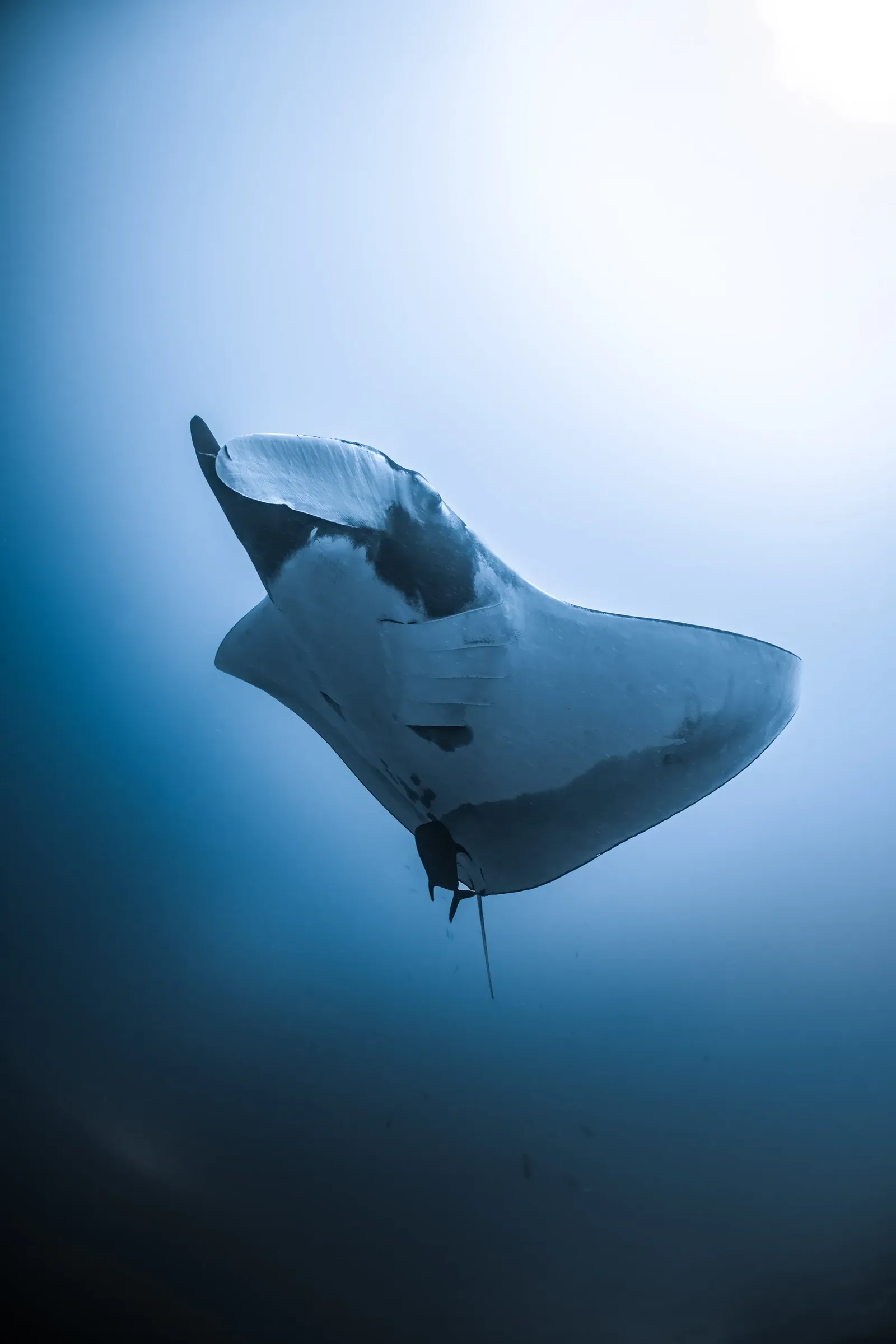
Hammerheads, Whale Sharks, Silver Tip Sharks, Oceanic Mantas
Farikede Dive Site
Farikede is Fuvahmulah's most advanced dive site and arguably its most rewarding. This deep southern plateau sits where the island's reef system meets the open Indian Ocean, creating a convergence zone where powerful currents concentrate nutrients and draw in virtually every apex predator the island has to offer.
This is not a casual dive. Farikede earns its Expert rating through unpredictable washing-machine currents, rapid depth changes, and the need for precise buoyancy control at 25–30m. The reward: hammerhead schools, oceanic mantas, whale sharks, silvertip sharks, and occasionally species you didn't expect — all in a single dive.
The site functions as a cleaning station and current convergence point. Pelagic species cruise the reef edge where upwelling cold water meets the shallower warm layer. The thermocline is often visible as a shimmering band at 20–25m — sharks and mantas concentrate along this boundary.
Best Conditions
October–April for hammerhead schools. March–May for manta mating trains. Dry season offers best visibility (25–35m). The site is current-dependent — some days are unfishable regardless of season.
How This Dive Works
Dive Type
Drift dive along deep reef wall and plateau edge
Entry
Back-roll. Negative entry recommended to avoid surface drift in strong current.
Bottom Type
Reef plateau transitioning to vertical wall. Mix of hard coral, rubble, and sandy patches.
Currents
Strong to very strong. Unpredictable direction changes — washing-machine conditions common. Can shift mid-dive.
Bottom Time
25–35 minutes (depth and current limit bottom time)
Best Time of Day
Early morning for hammerheads. Mantas more common mid-morning when plankton is active.
What You'll See at Each Depth
Reef top. Schooling fish, reef sharks, and the start of the current zone.
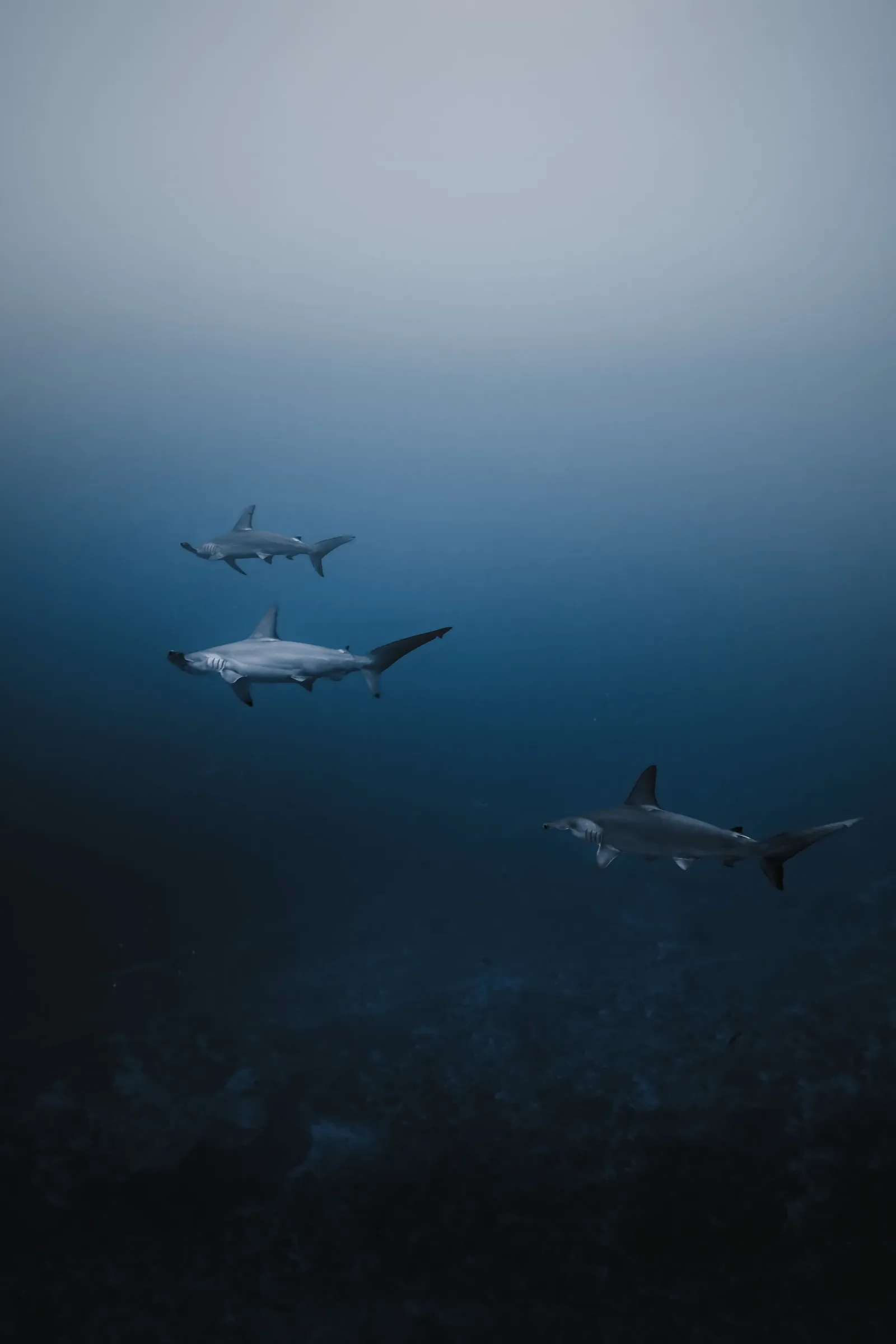
Thermocline zone. Hammerhead schools patrol this band. Visibility often changes dramatically at the thermocline.
Deep plateau edge. Silvertip sharks, oceanic mantas, and whale shark sightings. Maximum recreational depth — do not exceed.
Marine Life at Farikede
Scalloped Hammerheads
Schools of 5–30+ individuals cruise the thermocline. Peak season October–April. They patrol the deep reef edge and are skittish — stay still against the reef.
Whale Sharks
Occasional but spectacular. Large females (8–12m) pass the plateau, usually at 15–25m depth. More common during plankton blooms.
Silvertip Sharks
Bold reef predators (2–2.5m) that patrol the deep wall. Often the first large shark species sighted on the dive.
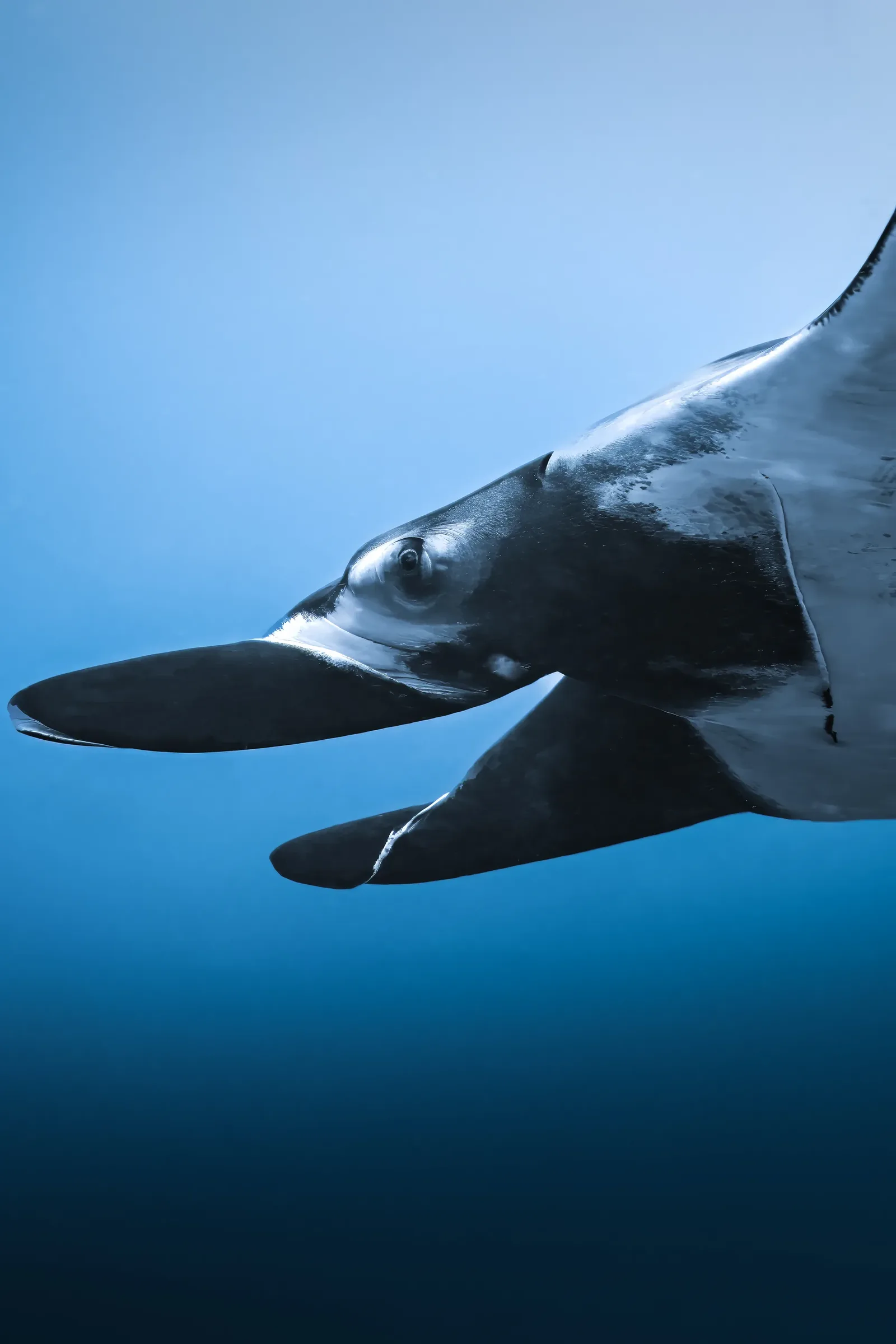
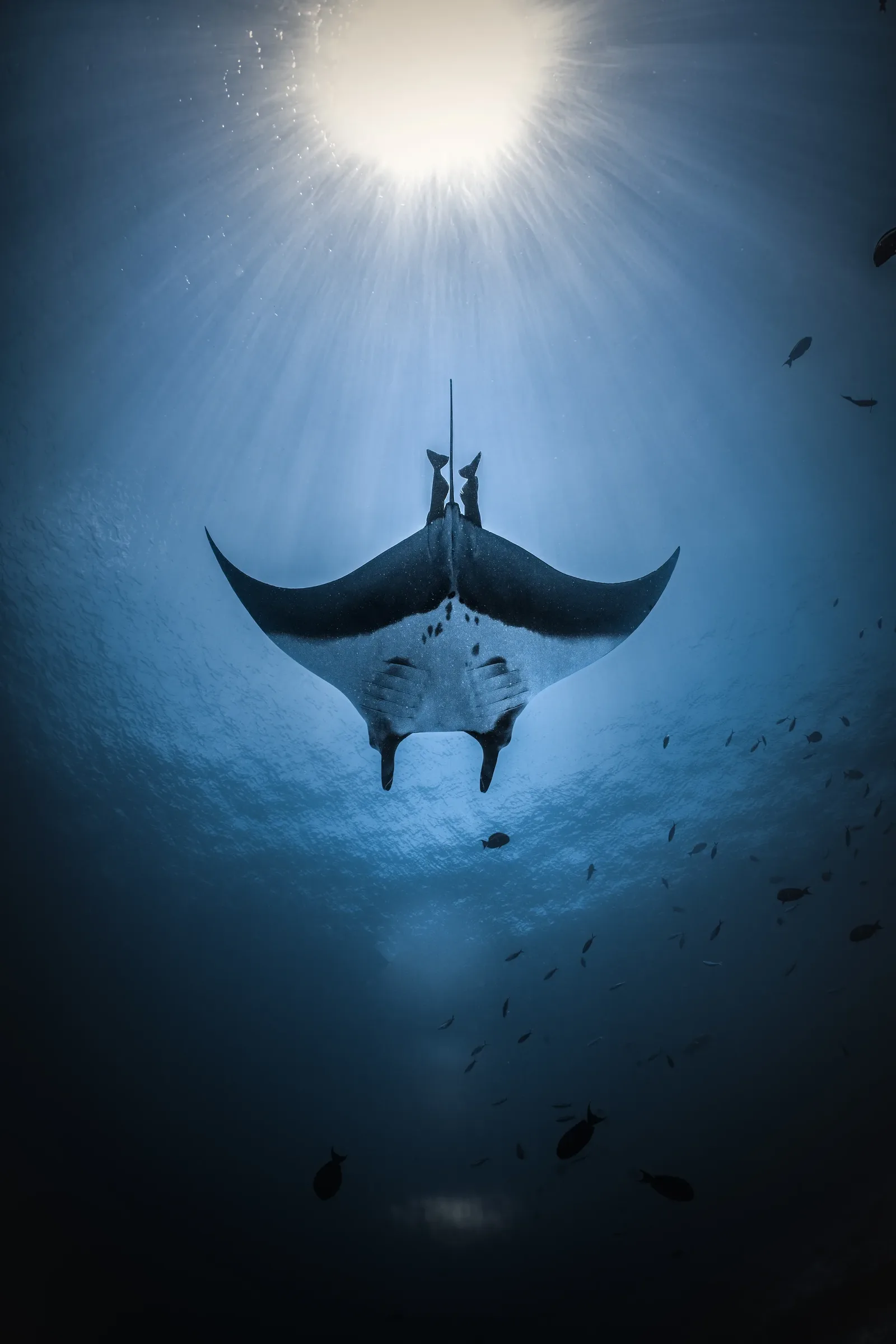
Oceanic Mantas
Mobula birostris with 5–7m wingspans. Feed on plankton concentrated by the upwelling. Peak March–May (mating season).
How to Dive Farikede
Fuvahmulah's apex dive site. Nowhere else on the island offers the same concentration of large pelagic species. If you're an experienced diver and conditions allow, Farikede is the dive you came to Fuvahmulah for (after Tiger Harbour).
Before You Dive
Photo Tips for Farikede
Common Questions
Can intermediate divers do Farikede?
+
What's the best month for hammerheads at Farikede?
+
How often is Farikede diveable?
+
Fuvahmulah Dive Packages
5 to 10-night tiger shark diving packages with hotel and transfers included.
Diving Rates & Prices
Transparent pricing for shark dives, courses, equipment, and add-ons.
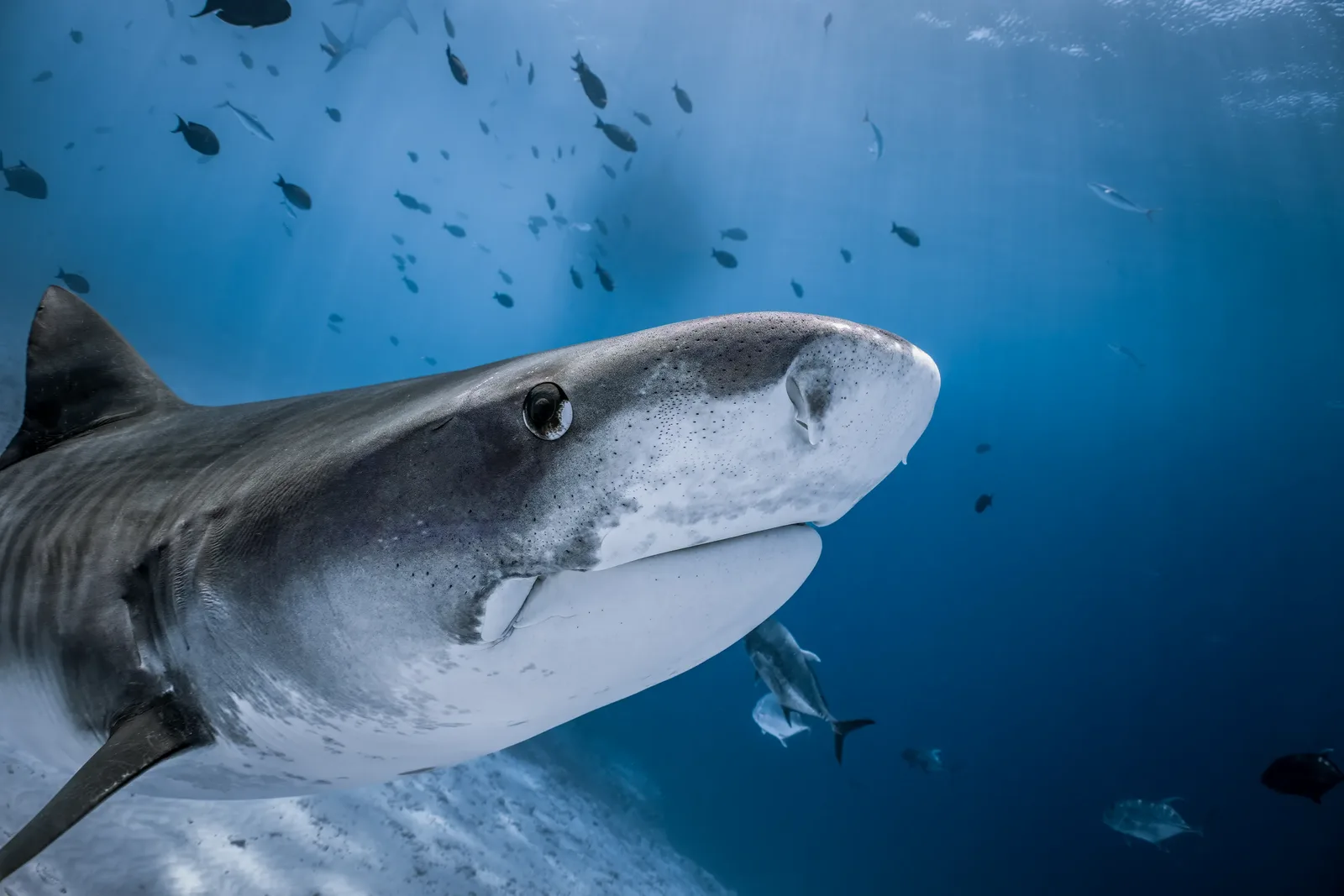
Tiger Sharks of Fuvahmulah
300+ named resident tiger sharks. Year-round encounters at Tiger Harbour.
Thresher Sharks of Fuvahmulah
Dawn cleaning station encounters with the elusive Pelagic Thresher.
Hammerhead Sharks of Fuvahmulah
Schooling scalloped hammerheads at Fuvahmulah's deep southern sites.
Oceanic Whitetip Sharks
Open-ocean encounters with the critically endangered oceanic whitetip.